

Publication date: 07.05.2026r.
For most of us, standing is a natural and effortless part of daily life. For many children with motor disabilities, achieving an upright position requires support, time, and the right device. This is what verticalization is: a purposeful, therapeutic process of gradually placing the body in a position close to standing – one whose benefits reach far beyond the rehabilitation room.
What is verticalization and when is it used?
Verticalization is a rehabilitation method that involves gradually bringing the body into an upright position using a specialized device – a standing frame. There are two main types: posterior standing (the child rests their back against a vertical surface) and anterior standing (the child rests their chest against a vertical surface).
It is used for conditions including: cerebral palsy, spina bifida, spinal muscular atrophy (SMA), paralysis of various origins, scoliosis and postural defects, as well as genetic disorders and orthopedic indications.
The decision to introduce verticalization is always made by a physician or physiotherapist – they assess the child’s condition and determine the appropriate type and intensity of therapy.
Why is verticalization so important?
The benefits of regular verticalization are multi-dimensional:
- Musculoskeletal system – stimulates proper development of the joints and spine, prevents contractures, and supports bone density.
- Respiratory system and circulation – expands the chest cavity, enables deeper breathing, and improves blood circulation.
- Digestive system – regulates intestinal motility and reduces problems with constipation.
- Muscle tone – normalizes tone both in children with spasticity and those with reduced muscle tone.
- Emotional and social development – a dimension that is often overlooked, yet equally important. A child in a standing frame sees the world from the same eye level as their peers, can actively participate in activities, and make eye contact. This has a profound impact on their sense of agency and motivation.
What does the verticalization process look like, step by step?
Verticalization is a regular component of a rehabilitation programme, not a one-time procedure. It requires consistency and close cooperation between the therapist, caregiver, and child.
1. Assessment and qualification – a physician or physiotherapist evaluates the child’s condition and creates an individual programme, assessing muscle tone, range of motion, and any contraindications.
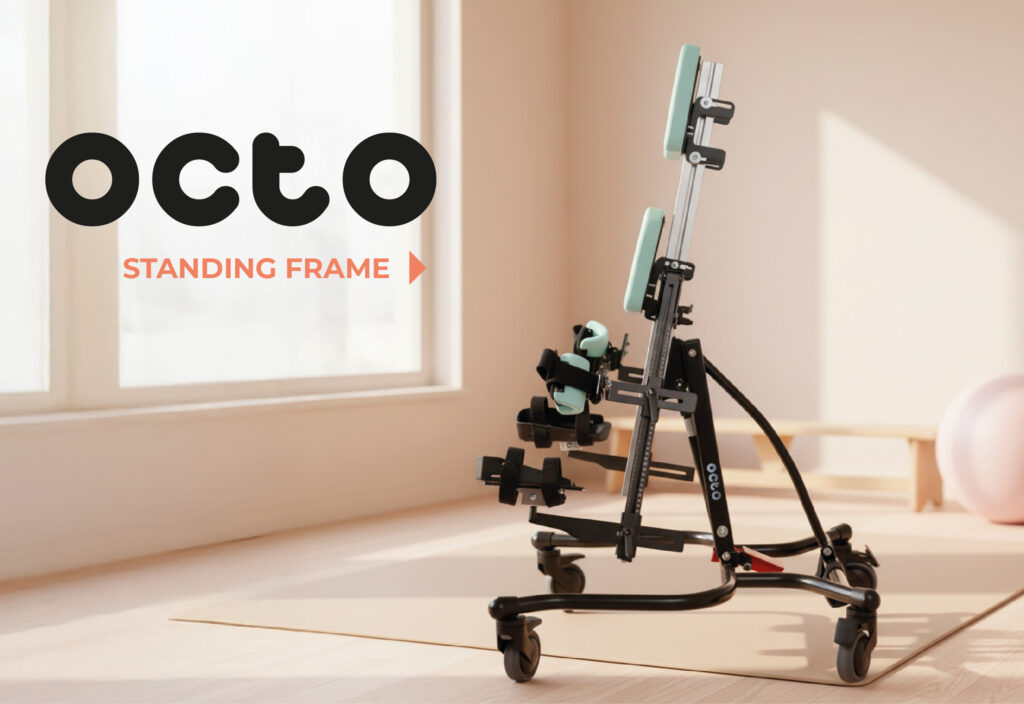
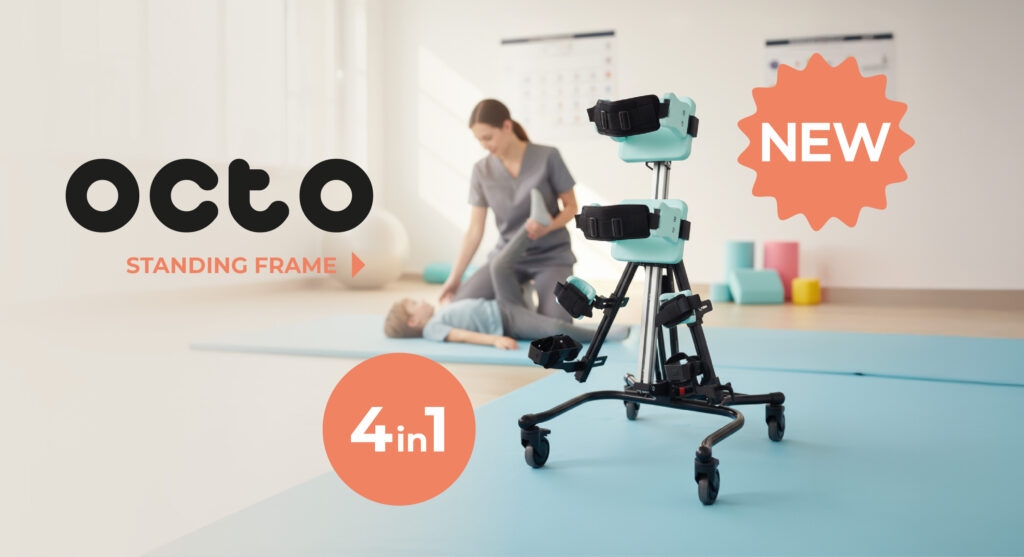
2. Choosing the right equipment – the standing frame must be matched to the child’s height, weight, and needs, and must offer a wide range of adjustment. This is exactly the requirement our Octo standing frame was designed to meet. It is a modern device for children between 90–130 cm tall and weighing up to 50 kg, supporting both posterior and anterior standing. Its solid construction, soft pads with stabilizing belts, the innovative OctoStep foot support system, and the hip abduction system allow the device to be precisely tailored to each child’s needs.
3. First sessions – initially short, lasting just a few minutes. The child’s body gradually adapts to the new position.
4. Gradually increasing duration – sessions are extended week by week, with the target being anywhere from 45 minutes to several hours per day.
5. Active therapy during verticalization – time in the standing frame is an ideal opportunity for therapeutic activities, play, and interaction with surroundings. The Octo can be expanded with a therapy tray and headrests for both anterior and posterior standing, supporting the child’s active participation throughout therapy.
6. Adjusting settings over time – as the child grows and changes, the equipment must keep pace. The Octo offers a wide range of adjustments: torso support, pelvic support, and knee supports, along with adjustable chest and hip pads – all set intuitively, without the need for specialist tools.
Verticalization – an investment in a child’s whole life
Regular verticalization is one of the most important elements of rehabilitation for children with motor limitations. It supports bone and muscle health, the function of internal organs, and muscle tone – as well as, equally importantly, a child’s emotional and social development.
The key to effective verticalization is well-chosen, safe, and adaptable equipment. The Octo standing frame was designed to meet these requirements fully – offering wide-ranging adjustability, comfortable support at every point of the body, and the ability to expand with accessories that support active therapy.
If your child is currently in rehabilitation, or you are just beginning to look for the right equipment – consult a physiotherapist and ask about verticalization. It is one of the most important steps you can take for your child’s health and quality of life.
Find out more about the Octo standing frame: mywam.eu/en/produkt/standing-frame-octo